
How to prove a slip and fall case
Afraid you cannot prove the owner knew about the hazard? Start a free case review with no fee unless you win.
At any hour, we test your proof free, and a slip and fall lawyer builds today.
Change state
- Alabama
- Alaska
- Arizona
- Arkansas
- California
- Colorado
- Connecticut
- Delaware
- Florida
- Georgia
- Hawaii
- Idaho
- Illinois
- Indiana
- Iowa
- Kansas
- Kentucky
- Louisiana
- Maine
- Maryland
- Massachusetts
- Michigan
- Minnesota
- Mississippi
- Missouri
- Montana
- Nebraska
- Nevada
- New Hampshire
- New Jersey
- New Mexico
- New York
- North Carolina
- North Dakota
- Ohio
- Oklahoma
- Oregon
- Pennsylvania
- Rhode Island
- South Carolina
- South Dakota
- Tennessee
- Texas
- Utah
- Vermont
- Virginia
- Washington
- West Virginia
- Wisconsin
- Wyoming
The three things you need
You fell on someone else's property, and now you need to know how to prove a slip and fall case. You need three things: a hazard, proof the owner knew about it, and an injury it caused. Lose any one, and the claim fails no matter how badly you are hurt.
A hazard is something a careful owner would fix or warn about. Think of a spill, a loose step, a torn mat, a dark stairway or ice left for days. An open and obvious hazard is harder, since the owner will say you should have seen it.
Proof the owner knew
You must show the owner knew about the hazard, or it sat long enough they should have found it. Proof can be a past complaint, a repair request or staff who walked by. Footprints and cart tracks through a spill, common in grocery store falls, show it sat a while.
Call us first for a free case review. Then a premises liability lawyer can demand store video, cleaning records, past incident reports and repair records. Those papers often prove notice when your own photos cannot.
Proof the fall hurt you
Your medical record has to connect the injury to the fall. A same-day visit that says "fell on wet floor" does that. A three-week gap invites the insurer to blame something else.
Get care now and keep every record. Our steps on what to do after a slip and fall show what to save.
Your role in the fall
Courts sort visitors into groups. Colorado's jury instructions set separate rules for trespassers, licensees and invitees. A paying customer is an invitee and gets the most protection under the invitee rules.
The owner will argue you were partly to blame: on your phone, in the wrong shoes, ignoring a sign. Most states then cut your award by your share, as our laws by state guide shows. Alabama, Maryland, North Carolina and Virginia can block your claim for any fault at all.
See how to prove a slip and fall case like yours
Answer six quick questions to see how your fall stands before you call.
Questions people ask after a fall
What are the three elements of a slip and fall case?
A dangerous condition, notice to the owner, and an injury caused by the fall. Many lawyers add a fourth: that you were careful enough yourself.
What is slip and fall negligence?
Negligence means the owner did not take reasonable care to find and fix a hazard or warn you. It is the legal basis for almost every fall claim.
Who is liable in a slip and fall?
Whoever controls the property is liable. That can be the store, the landlord, the business renting the space or a city. A cleaning or snow removal company can share the blame.
What if there was a wet floor sign?
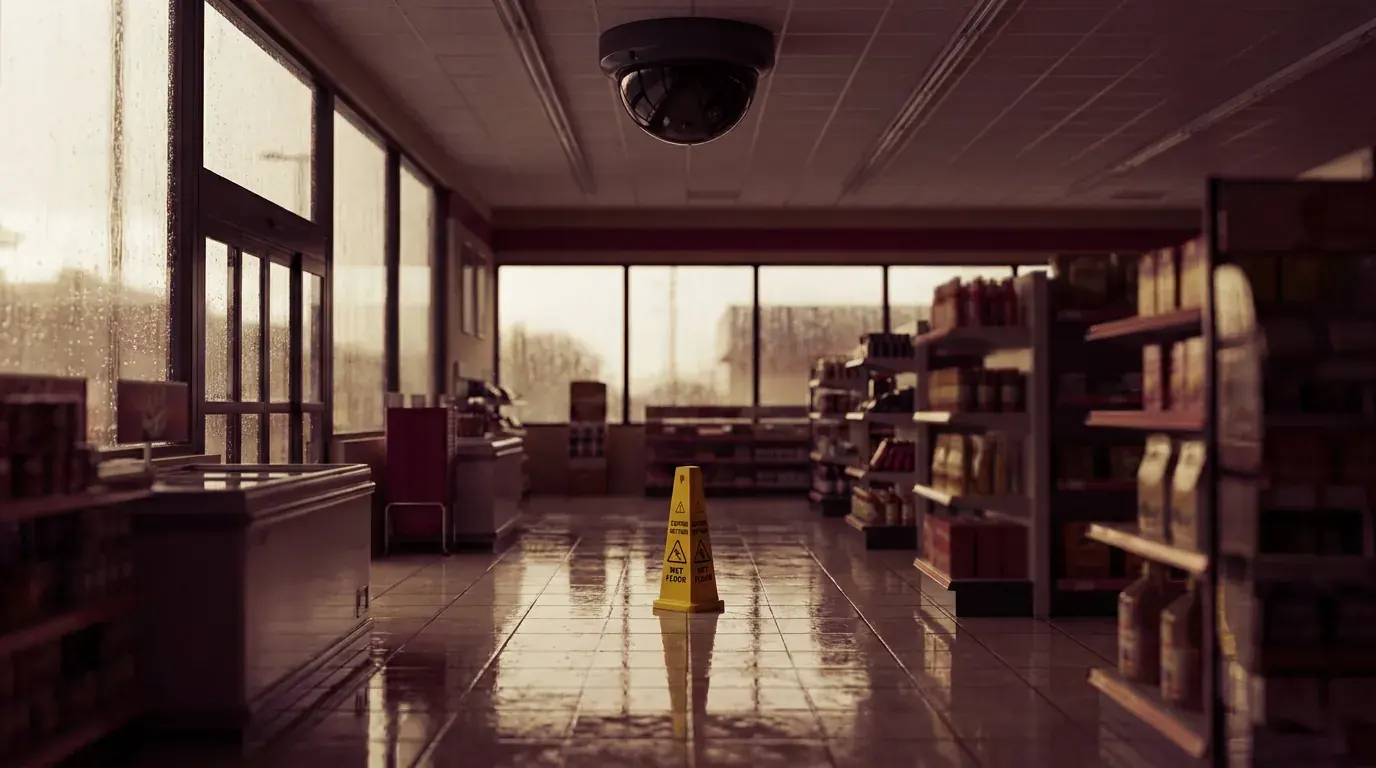
A visible sign makes the claim much harder, because the owner warned you. It can still be a case if the sign was hidden or too far away. It also counts if the spill was much bigger than the sign suggested.
Your state
What to do now
You need to show a hazard, owner knowledge and an injury it caused. Without video and cleaning records, the owner can deny knowing about the hazard. Call now so a lawyer can demand the video, cleaning records and repair files.
The review is free. A slip and fall lawyer in your state takes the case on contingency: no fee unless you win.