
Hurt in a trip and fall? Get help today
A raised slab tripped you, and the cost scares you. Get a free case review and pay no fee unless you win.
Any time, we go over your trip free and a slip and fall lawyer moves today.
Change state
- Alabama
- Alaska
- Arizona
- Arkansas
- California
- Colorado
- Connecticut
- Delaware
- Florida
- Georgia
- Hawaii
- Idaho
- Illinois
- Indiana
- Iowa
- Kansas
- Kentucky
- Louisiana
- Maine
- Maryland
- Massachusetts
- Michigan
- Minnesota
- Mississippi
- Missouri
- Montana
- Nebraska
- Nevada
- New Hampshire
- New Jersey
- New Mexico
- New York
- North Carolina
- North Dakota
- Ohio
- Oklahoma
- Oregon
- Pennsylvania
- Rhode Island
- South Carolina
- South Dakota
- Tennessee
- Texas
- Utah
- Vermont
- Virginia
- Washington
- West Virginia
- Wisconsin
- Wyoming
Who controlled the hazard
If you got hurt in a trip and fall on someone else's property, you can have a claim. It turns on who controlled the hazard and how long it sat there.
Your foot caught on something, like a raised slab, a cord, a torn carpet or an uneven stair. Call us for a free case review, then start gathering proof.
Common trip hazards
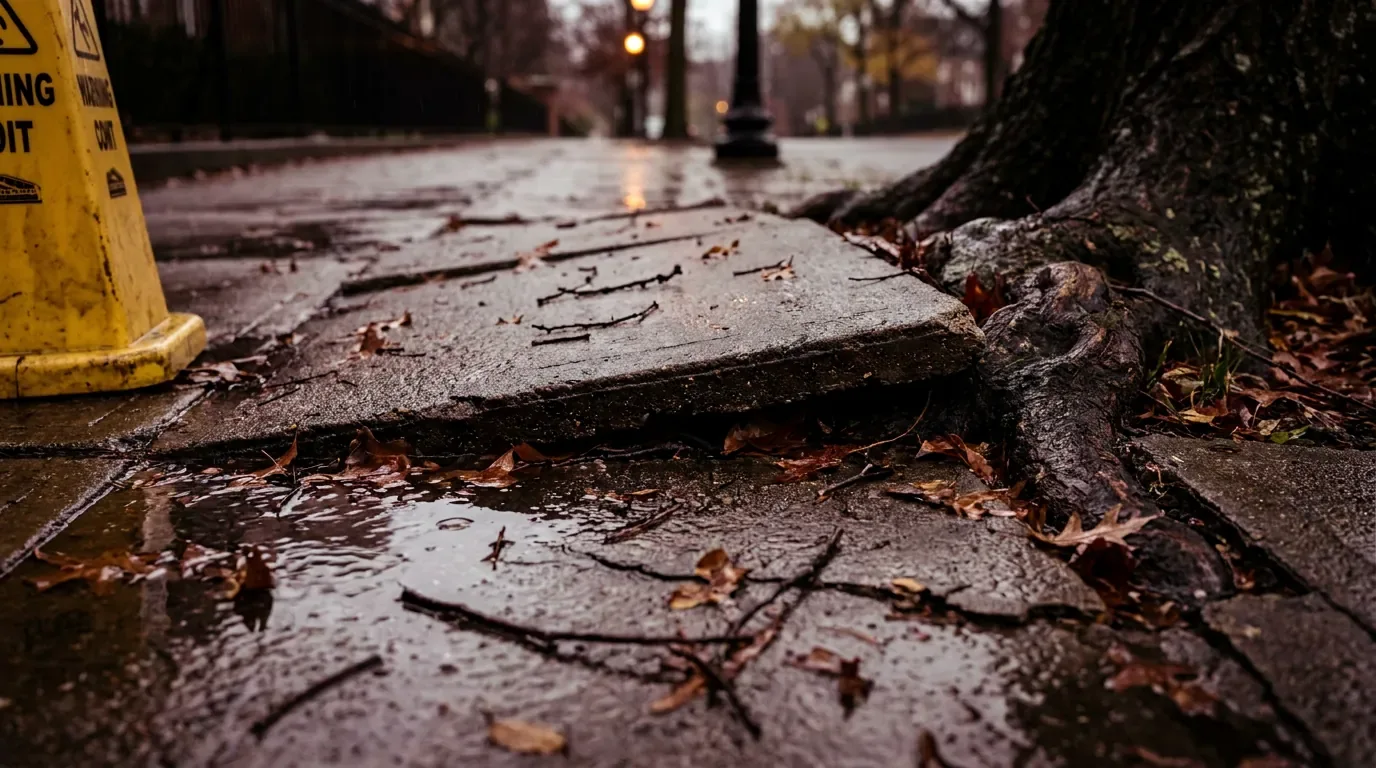
Broken or lifted sidewalks, cords and hoses across walkways, and boxes left in aisles cause many falls. So do loose carpet edges, a missing stair handrail and a single unmarked step. Poor lighting turns a small hazard into a fall.
OSHA lists falls on the same level among the leading causes of serious work injuries. That is why stores and offices are expected to keep walkways clear.
How trips differ from slips
A slip comes from a slick surface. A trip comes from an object or an edge. Trip hazards stay put for days or months, so proving the owner knew is often easier.
The other side will argue the hazard was easy to see. Put a coin or a ruler next to a raised edge and photograph it. Inspectors and juries think in inches.
Who answers for a sidewalk
Take James, 58. He caught his toe on a sidewalk slab lifted 2 inches by a tree root in New York City. There, the building owner next door answers for most sidewalks, not the city.
Your lawyer finds out who owned the spot, which matters most for sidewalks. City sidewalks can need a written notice within months. Learn the sidewalk fall deadlines and act before one passes.
What a trip and fall case pays
Trip cases are valued the same way as slips. You can recover medical bills, lost pay and pain. That total is cut by your share of fault.
Trips throw people forward, so broken wrists and facial injuries are common. The settlement calculator gives a range for your numbers.
Questions people ask after a fall
Can you sue for tripping on a sidewalk?
Often, yes, if the city or the property owner knew or should have known about the broken spot. Who answers depends on the city. New York City puts most sidewalks on the building owner.
How high does a sidewalk defect have to be to sue?
There is no single national number. Courts look at the height, the lighting and how easy the edge was to see. Photograph it with a ruler for scale.
Is a trip and fall worth suing over?
It can be if you needed treatment or lost work. A lawyer can tell you in one free call whether the owner's notice can be proved.
Who is liable if I trip in a store?
The store, if staff left the hazard or should have found it. A vendor stocking shelves or a cleaning company can share the blame.
Your state
What to do now
You tripped on a raised slab, a cord, a box or torn carpet. The height of that edge is proof, so photograph it before someone fixes it. Call now and get a lawyer looking at your photos today.
The review is free. A slip and fall lawyer in your state takes the case on contingency: no fee unless you win.